
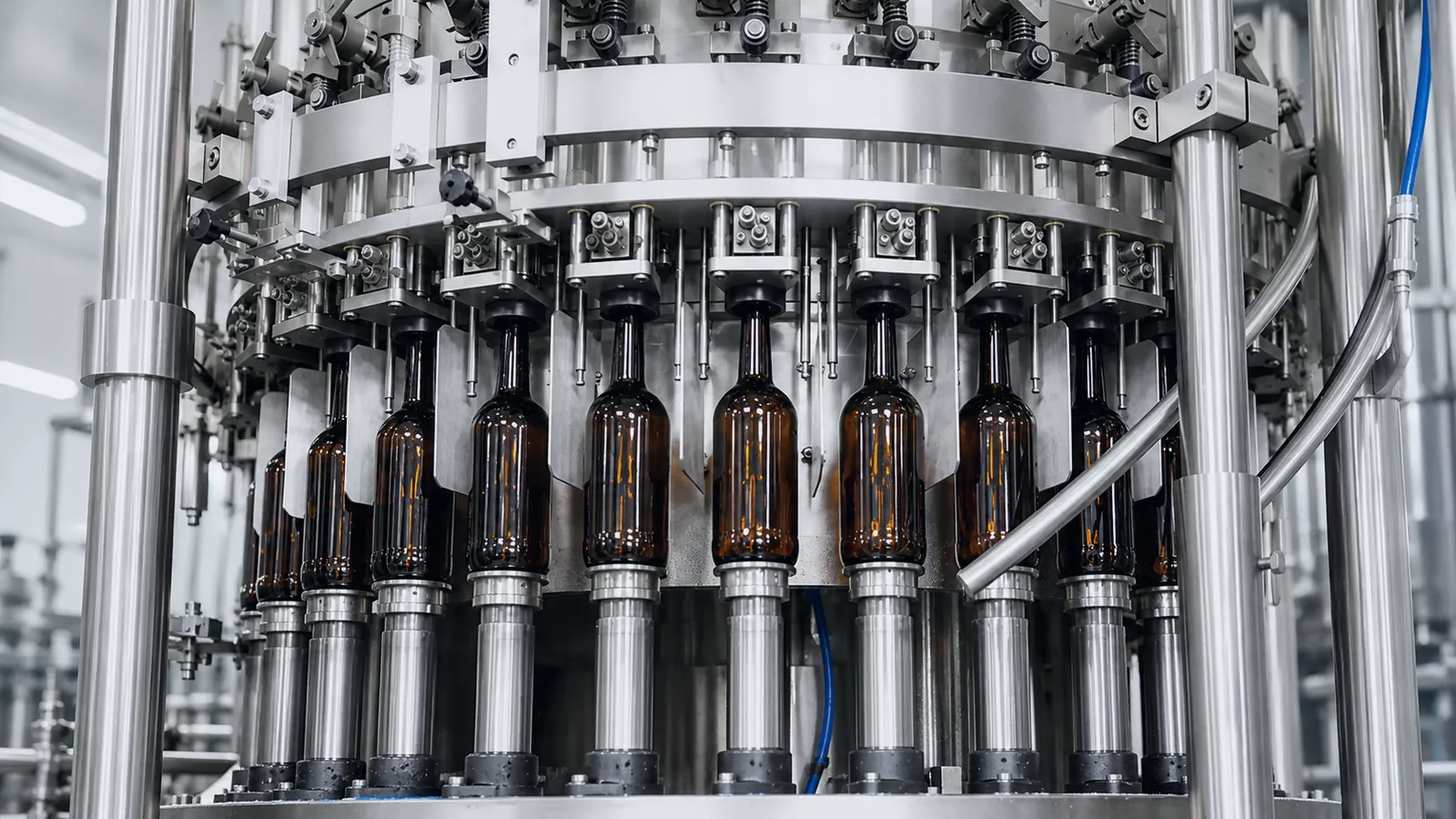
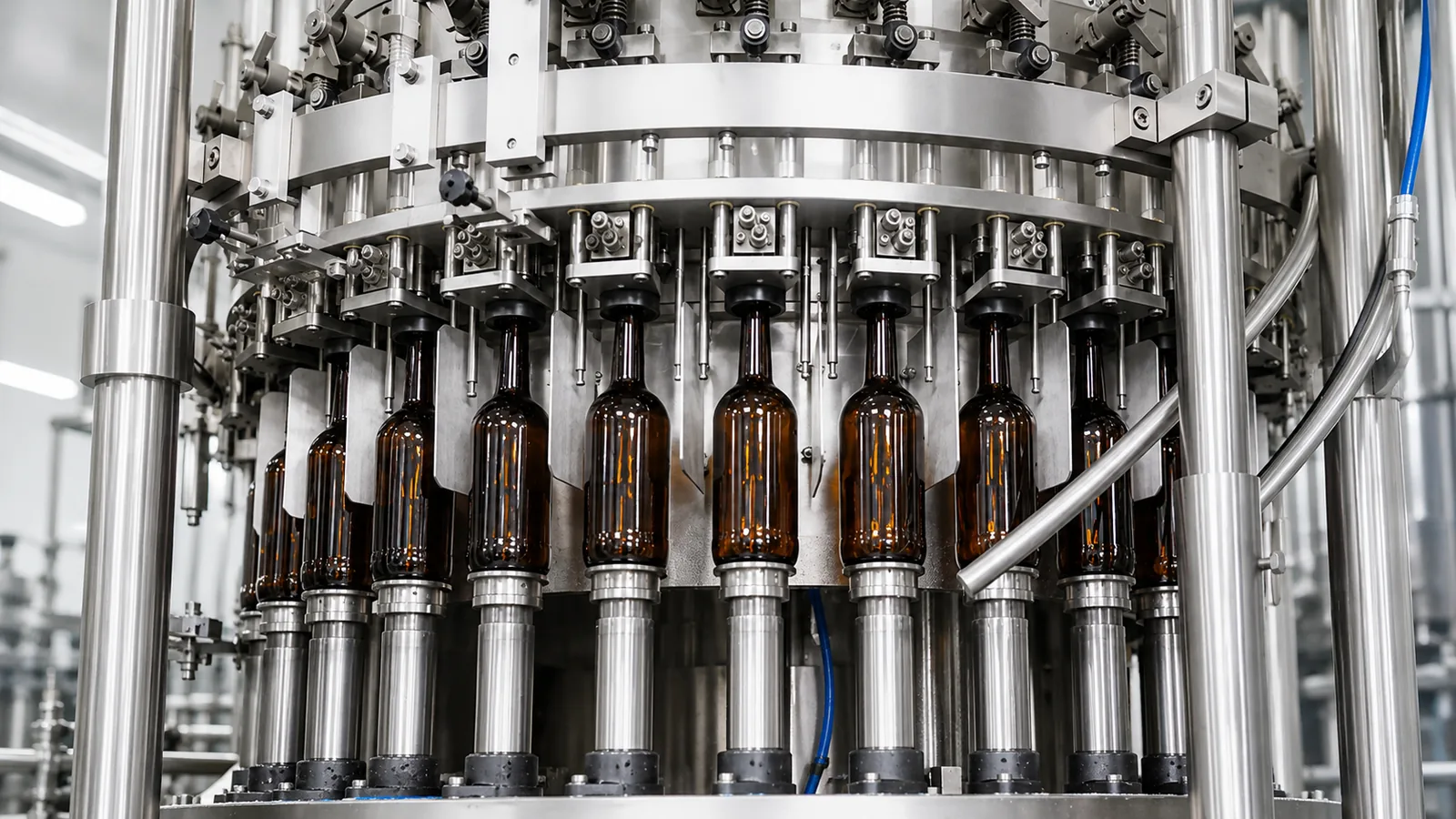
Glass bottle beer line
For new or returnable glass bottles, with controlled bottle handling, low-oxygen counter-pressure filling and crown or cap closing.
- New or returnable glass
- Crown or cap closure
- Pasteurization configured
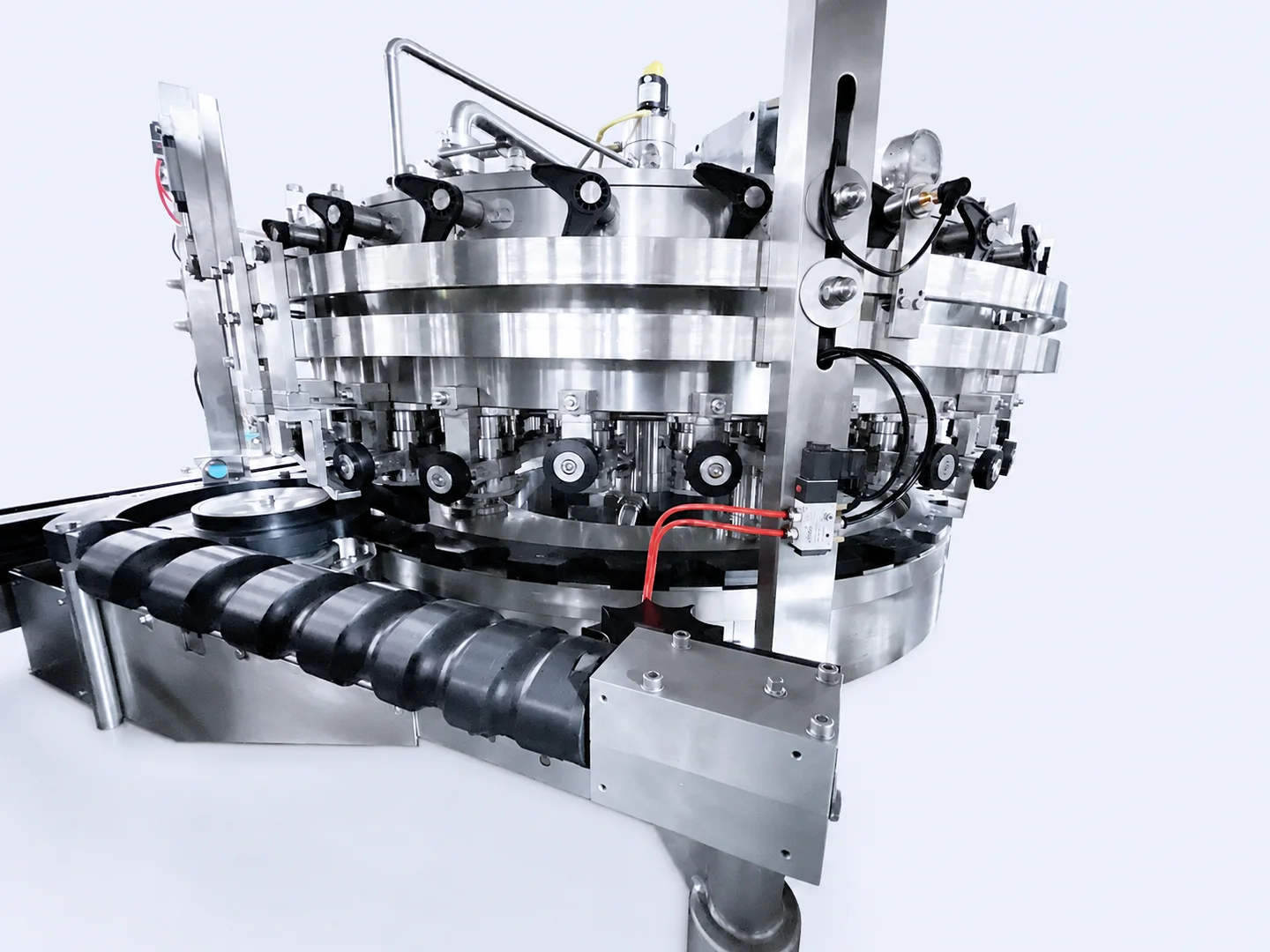
Turnkey beer filling & packaging lines
Engineer the cold product path, low-oxygen filling, secure closure and finished-pack route around your beer—not around a generic machine list.
Choose your package route
Glass bottles, cans and PET share the conditioned-beer core. Container supply, closure, inspection and downstream handling define the route.

For new or returnable glass bottles, with controlled bottle handling, low-oxygen counter-pressure filling and crown or cap closing.

For aluminium beverage cans, connecting empty-can handling, low-oxygen filling, seaming, inspection and finished-pack preparation.
For pressure-rated PET beer bottles where bottle design, oxygen protection, cap selection and shelf-life strategy are confirmed together.
Capacity and model ratings follow after the beer, package, closure, stabilization plan and engineering test basis are confirmed.
Your beer. Our process.
Switch package formats to see how container supply, closure and downstream treatment change around the same protected beer path.
New or returnable glass route
The glass route starts with conditioned beer and joins bottle preparation to low-oxygen counter-pressure filling, crown or cap closing and the confirmed stabilization process.
The diagram defines functional sequence, not final equipment count or layout. Battery limits, bypasses, inspection points and thermal treatment are confirmed during engineering.
Aluminium can route
The can route links empty-can depalletizing and rinsing to filling, end placement, seaming and downstream thermal or packaging steps.
The diagram defines functional sequence, not final equipment count or layout. Battery limits, bypasses, inspection points and thermal treatment are confirmed during engineering.
Pressure-rated PET route
The PET route is planned around an approved pressure-rated bottle and cap, with bottle supply meeting the beer route at counter-pressure filling.
The diagram defines functional sequence, not final equipment count or layout. Battery limits, bypasses, inspection points and thermal treatment are confirmed during engineering.
Quality control for great beer
Protect flavour and consistency by defining the measurements, inspection points and cleaning strategy before equipment models are selected.

Limit oxygen pickup through transfer, purging, filling and closure.
Maintain repeatable fill volume and package presentation.
Verify crown, cap or seam performance for the selected package.
Design cleanable product paths and repeatable cleaning cycles.
Hold product condition through filling and downstream handling.
Define the finished package
Final artwork and product photography can be added later. For now, these placeholders keep the route and copy structure ready.
Premium presentation with new or returnable bottle routes and carefully controlled glass handling.
Explore this formatLightweight packs with defined can-and-end compatibility, controlled filling and verified seaming.
Explore this formatA project-specific route based on bottle pressure performance, oxygen protection and distribution needs.
Explore this formatBeer line FAQ
Detailed ratings belong to each package route after product and engineering inputs are confirmed.
Share the beer style and condition at filling, filtration status, carbonation, temperature, container and closure drawings, target output, shelf-life goal, stabilization plan, final pack and available utilities.
Oxygen introduced during transfer, filling or closing can shorten flavour stability and shelf life. The line therefore needs a defined product path, purging strategy, filling method and closure sequence.
No. The decision depends on the beer, microbiological strategy, upstream process, package, distribution and shelf-life target. It should be confirmed with the brewer and process team.
They share the conditioned-beer core, but container supply, rinsing, closure, inspection, thermal handling and secondary packaging differ. Each route is engineered around the final package.
Yes. The packaging scope can begin at an agreed battery limit from an existing bright beer tank or product supply system. Transfer conditions and controls must be defined during engineering.
After the package, product condition, filling temperature, carbonation, operating schedule and performance basis are confirmed. This category page intentionally avoids unsupported ratings.
Send us the product, package format and target output. We return a line configuration and budgetary quote.
Inquiry received
Our engineering team will respond within 24 hours with a line configuration.
Reference —