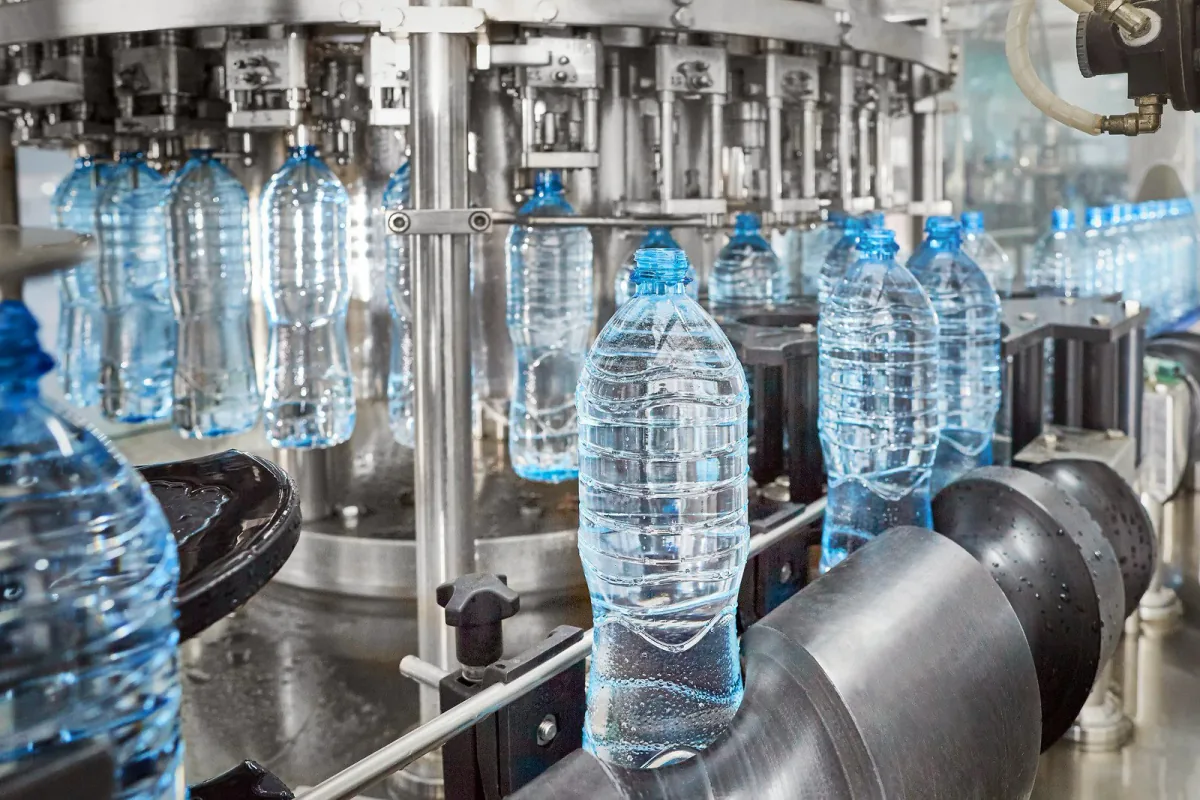
Complete carbonated drinks PET bottle filling production line
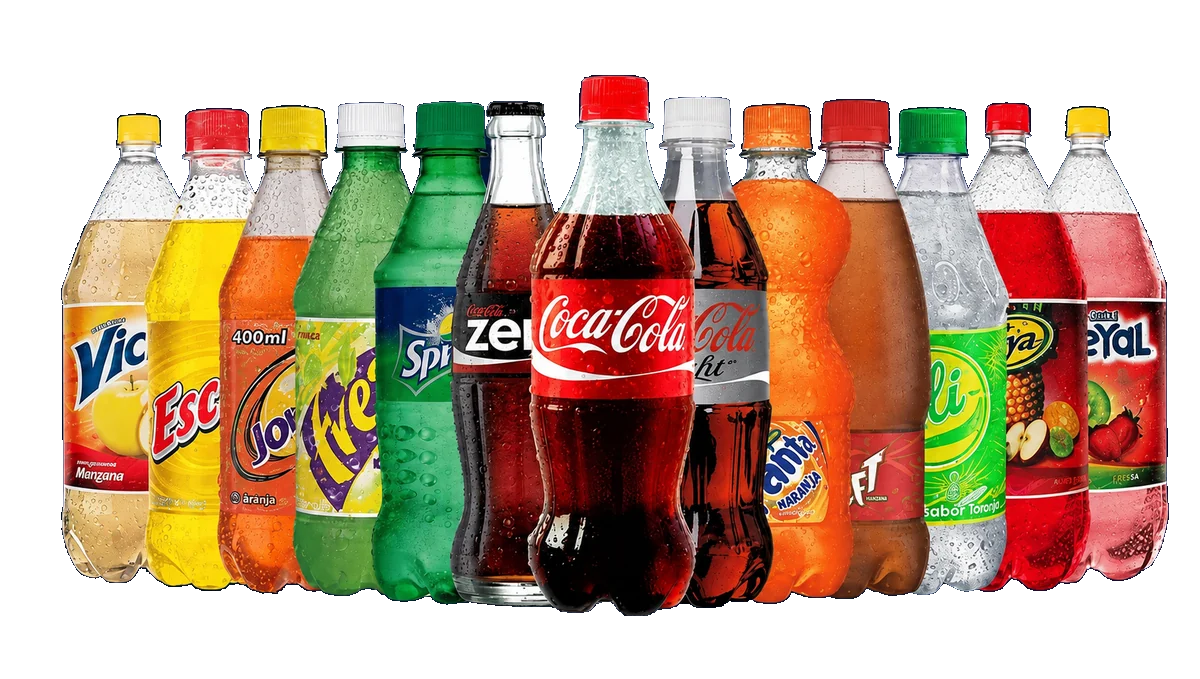
Configure cola, flavored soda, sparkling water and other approved carbonated beverages in pressure-rated PET bottles. The process is balanced around bottle performance, product temperature, CO₂ target and required saleable output.
Follow PET bottles through rinsing, counter-pressure filling and capping in one connected process.
00:43 · Factory footageManufacturer demonstration. Final output depends on the bottle and beverage.
Key features
Built around pressure, temperature and carbonation.
Each point connects a measurable beverage or bottle condition to filling stability and finished-pack quality.
01
Carbonated drinks pre-mix
Pre-mixing standardizes the finished beverage ratio so sugar and CO₂ remain consistent from bottle to bottle. Designed for high-speed continuous production, it is the standard preparation process for carbonated drinks.
02
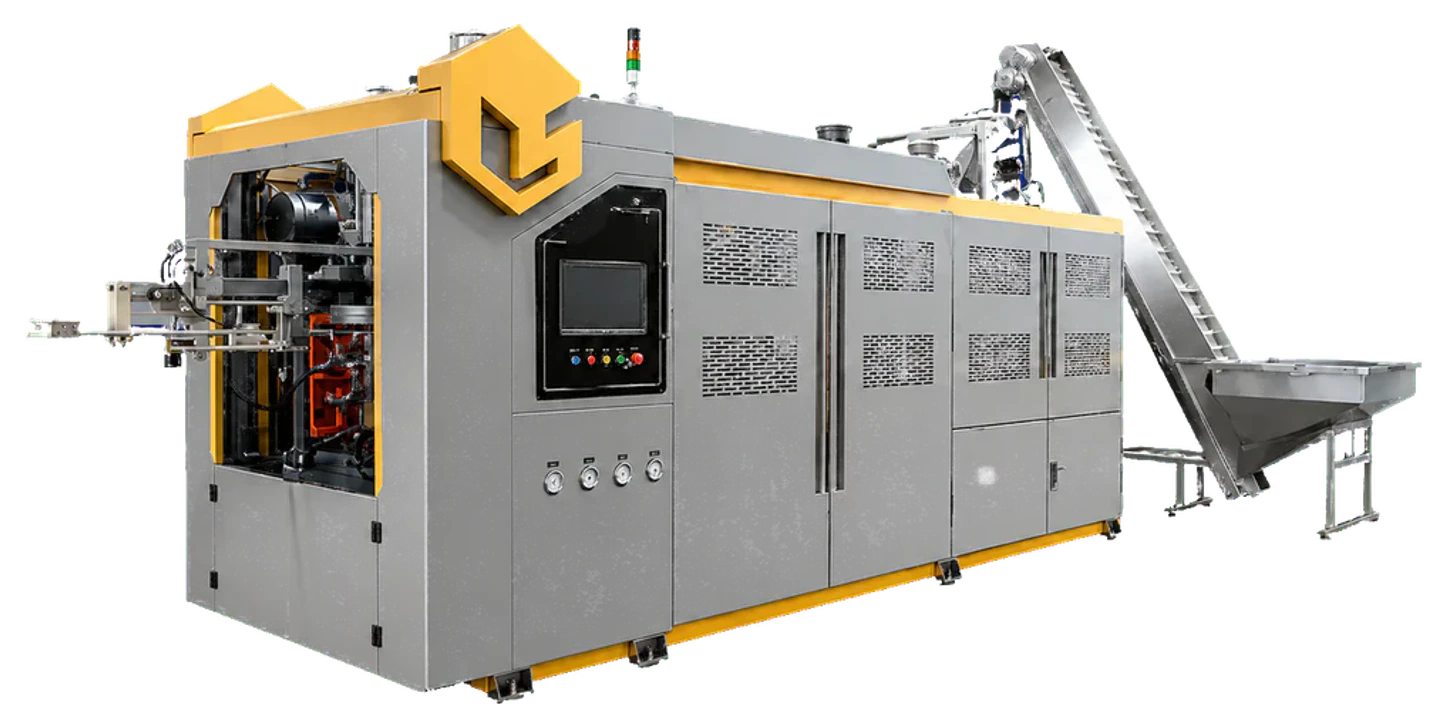
Automatic blowing machine
We design the ideal bottle for each customer. Stable blow molding performance is decisive for shaping good bottles consistently.
03
Stable filling control
Stable automatic filling control with high-quality filling valves. Electrical components from Siemens and Schneider, pneumatics from Festo, SMC and Airtac, and bearings from SKF and NSK keep machine performance stable.
04
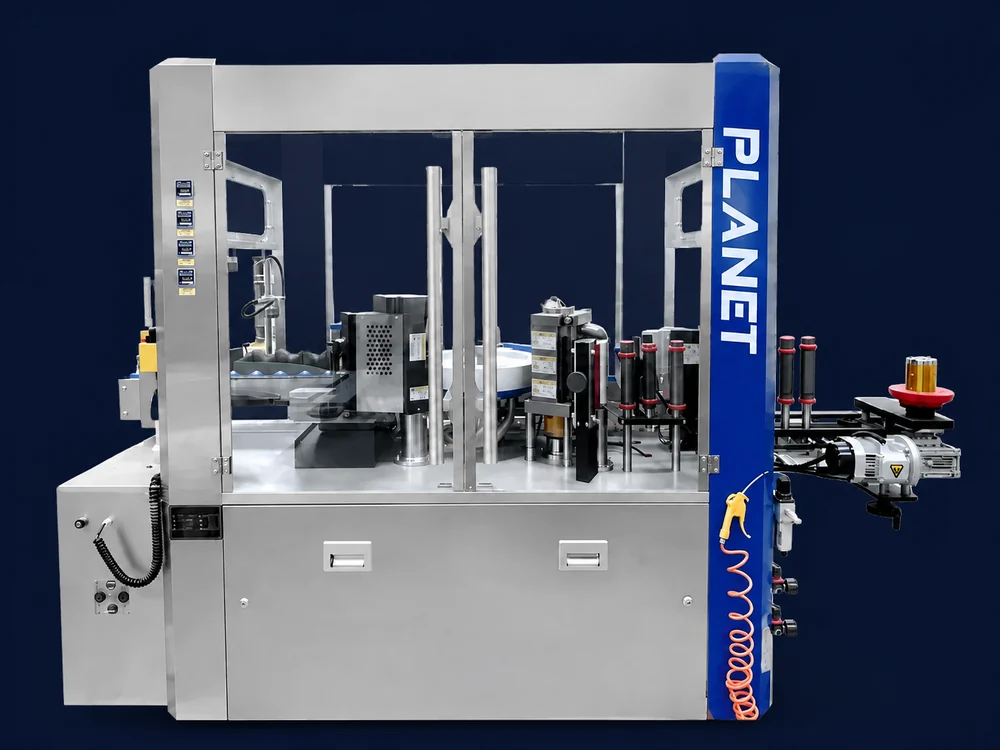
Labeling type
Hot-melt OPP, adhesive and shrink-sleeve labeling machines cover the main label formats in the market. We can also help customers develop their label designs.
05
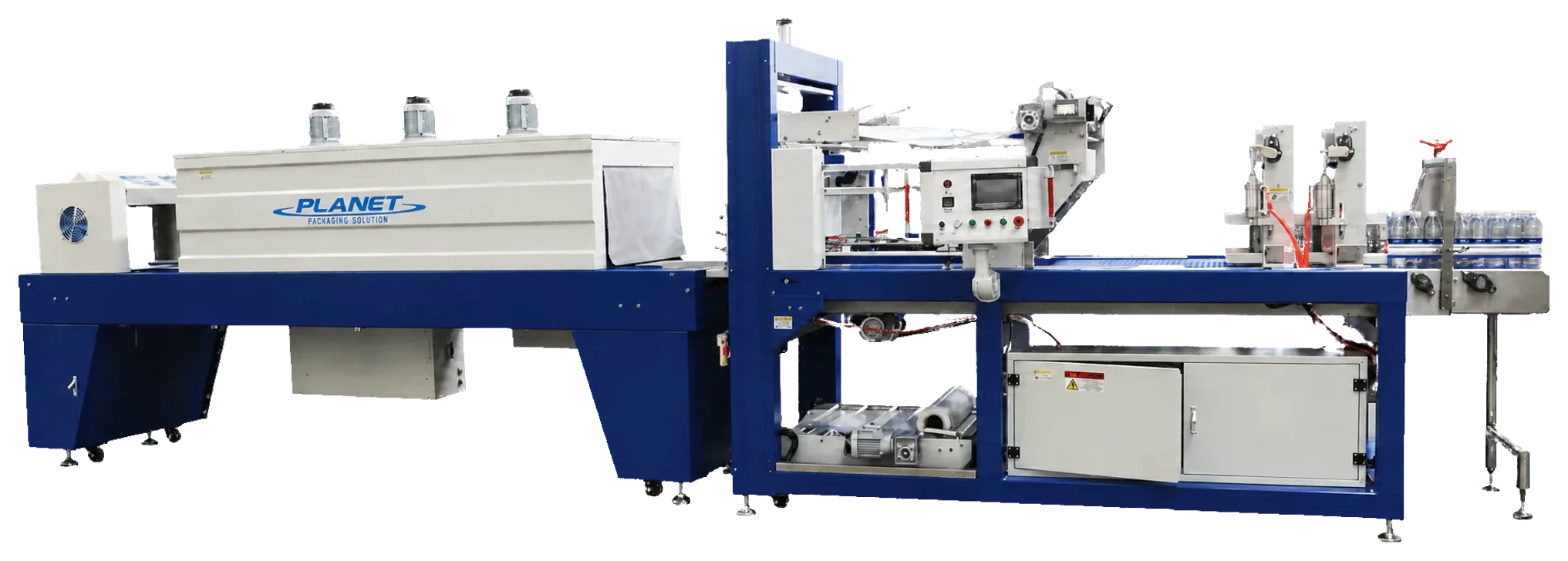
Secondary package
Beyond the standard shrink wrapper, we also provide case packing machines, half-tray shrink wrapping and other packaging solutions.
06
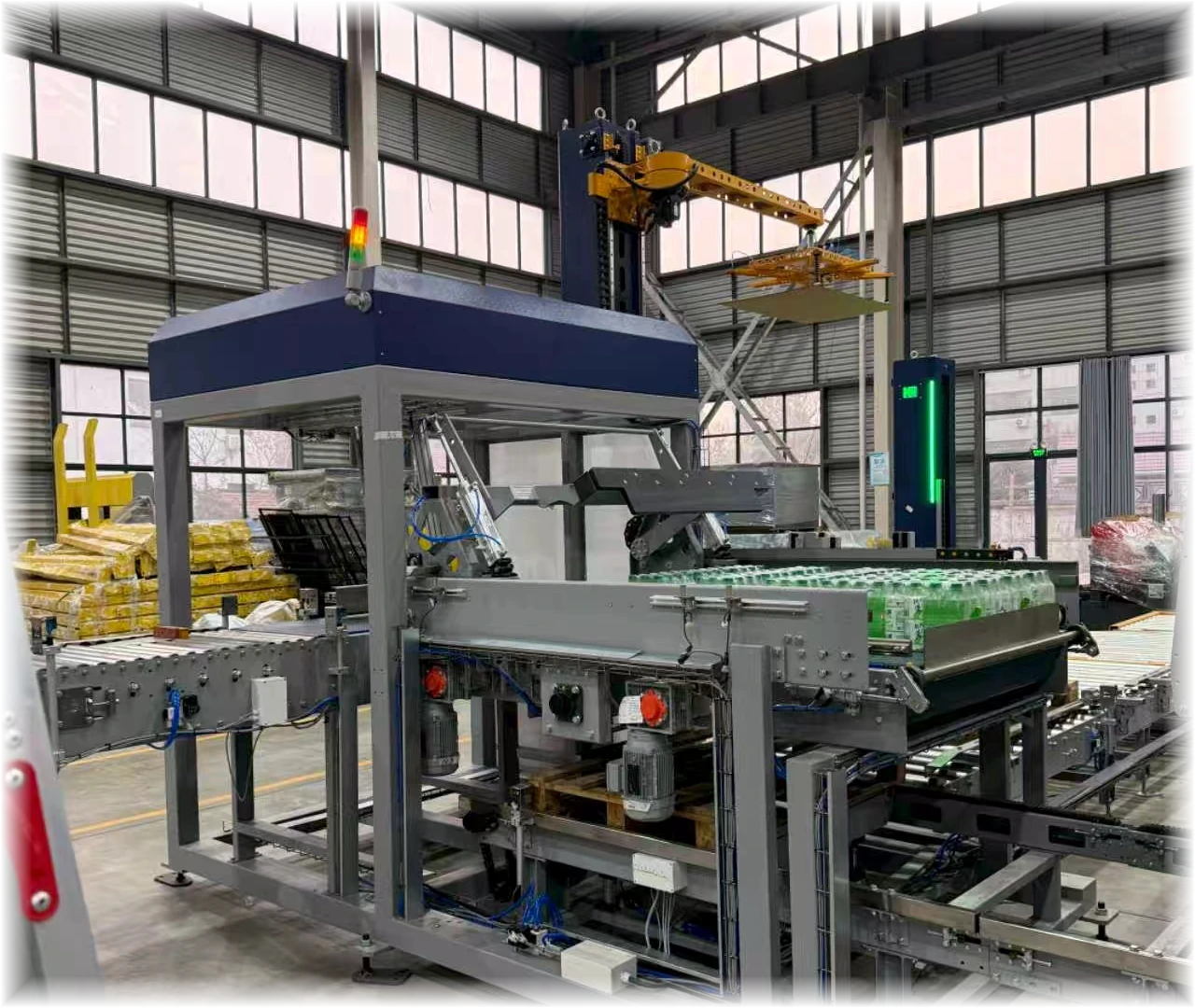
Palletizer
Palletizer configurations are matched to the required capacity and customized project needs.
Model selection
Compare the filler by published dimensions.
Published DCGF specifications for PET carbonated beverages. Confirm the bottle volume, recipe, CO₂ target and filling temperature before selecting a model. Whole-line utilities and footprint are reviewed separately.
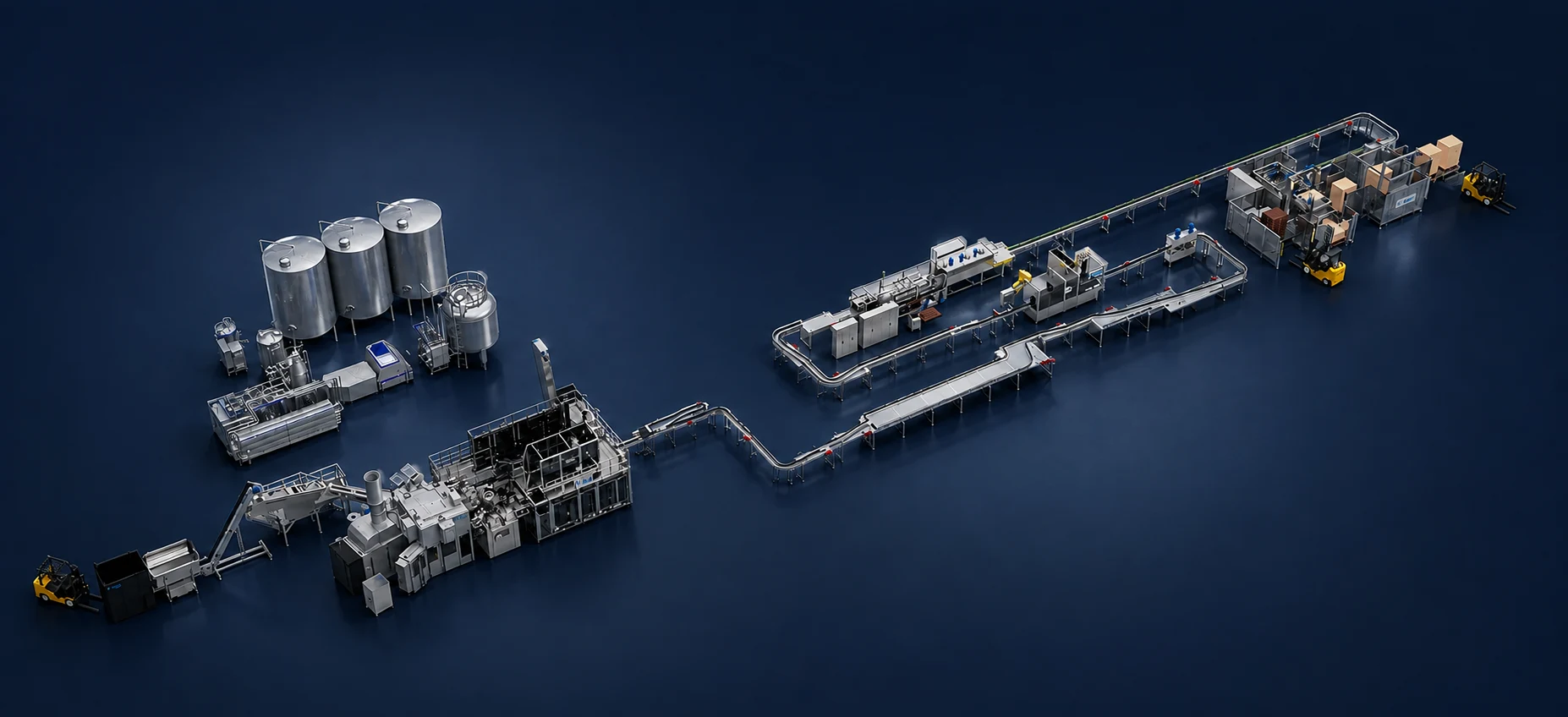
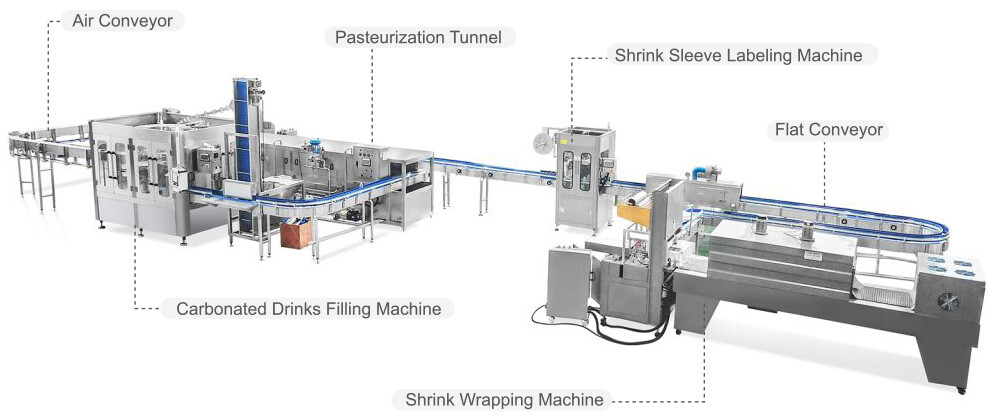
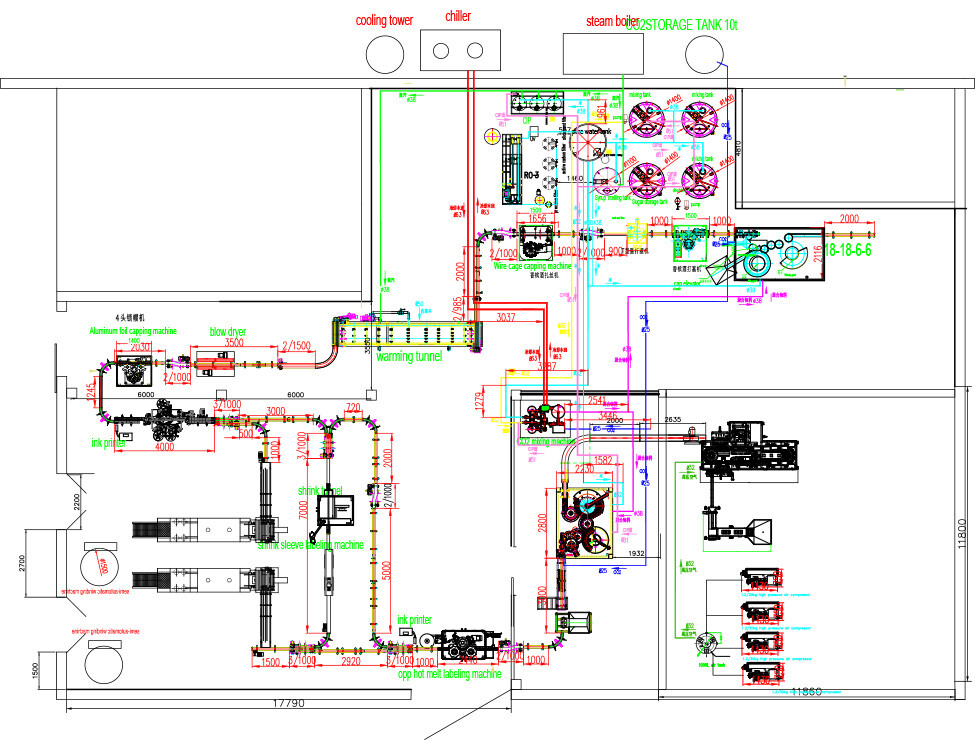
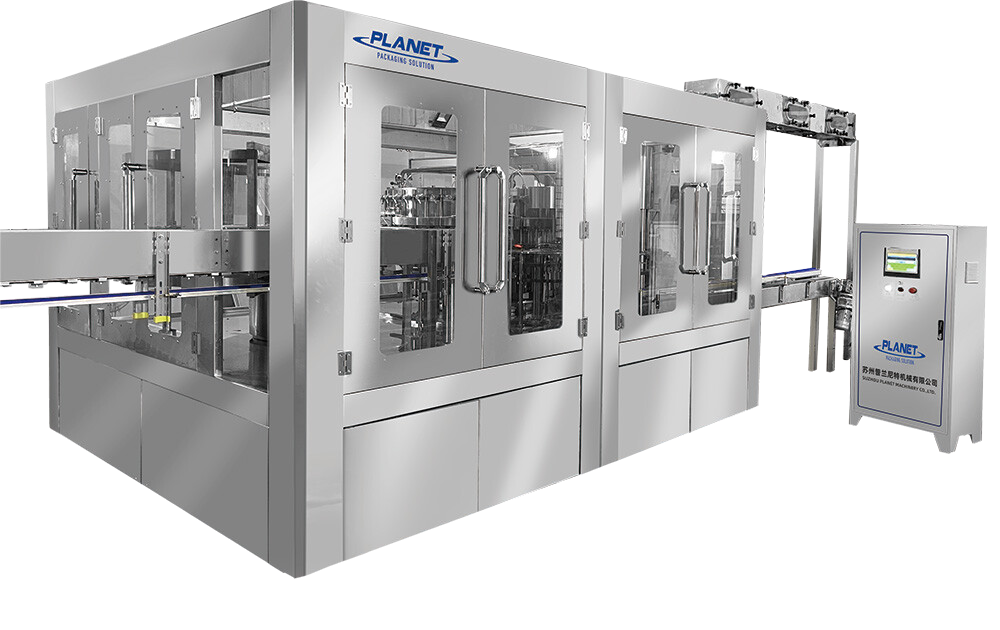
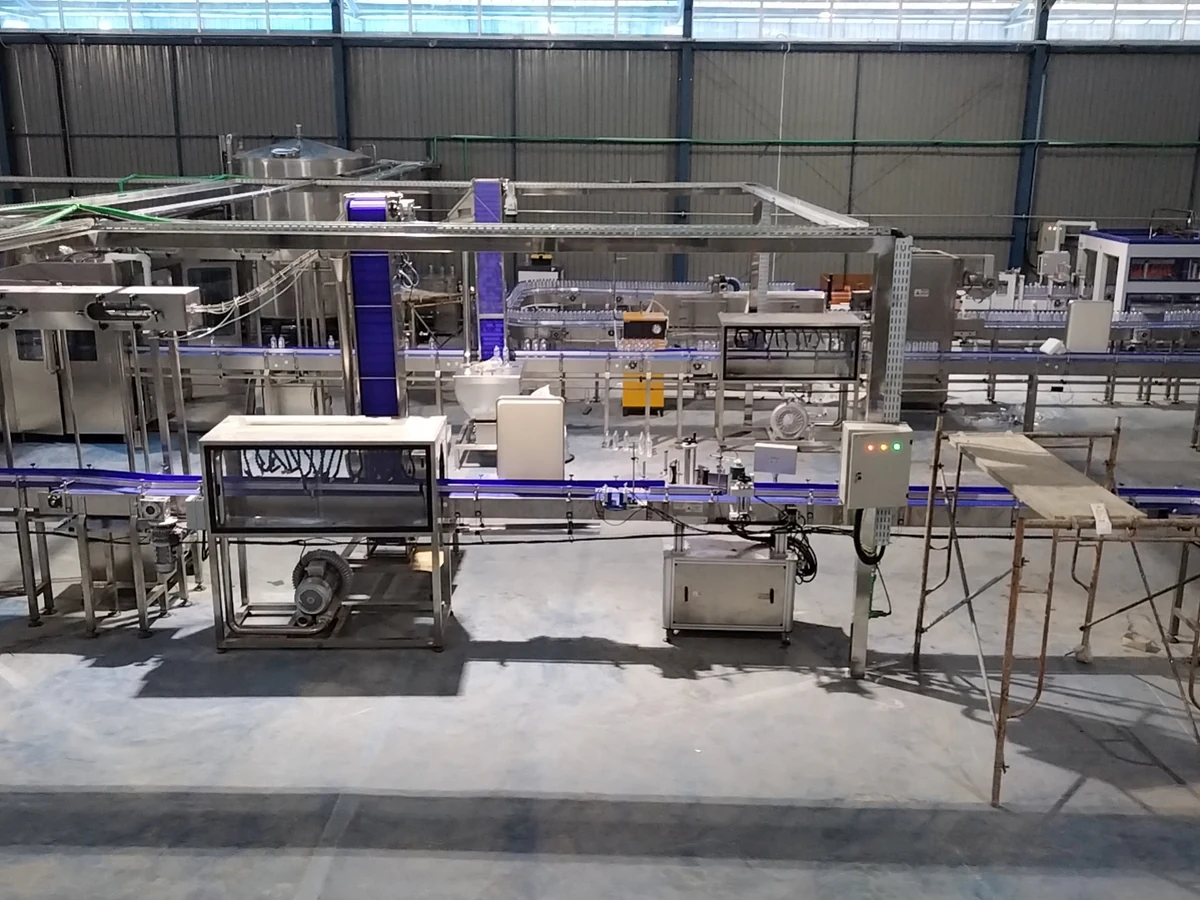
Manufacturer production-line diagram · background removed for display; thermal treatment and final equipment scope are project-specificView full image Manufacturer CAD reference · dark-mode preview; open the original white-background image for detail review. Not a project-approved layout.View full image Original machine photograph · glass, reflections, stainless steel and branding preserved; external backdrop removedView full image
DCGF three-in-one filler · manufacturer-published specifications; output basis to be confirmed
Model
Heads R / F / C
Capacity (BPH)
Filler power (kW)
Machine L × W × H (mm)
Weight (kg)
DCGF14-12-5
14 / 12 / 6*
2,000–3,000
3
2360 × 1770 × 2350
2,500
DCGF18-18-6
18 / 18 / 7*
4,000–5,000
3.5
2930 × 2150 × 2450
4,800
DCGF24-24-8
24 / 24 / 8
6,000–8,000
5
3300 × 2250 × 2450
5,900
DCGF32-32-8
32 / 32 / 9*
9,000–12,000
5
3430 × 2650 × 2450
6,900
DCGF40-40-10
40 / 40 / 10
12,000–15,000
9
4430 × 3280 × 2450
10,000
DCGF50-50-12
50 / 50 / 15*
16,000–18,000
9
5900 × 3300 × 2450
15,500
DCGF60-60-15
60 / 60 / 15
19,000–21,000
13
6000 × 5220 × 2550
18,500
DCGF72-72-18
72 / 72 / 18
26,000–28,000
18
6540 × 4900 × 2550
25,500
* Capping-head counts are reproduced from the published table and differ from the model suffix on four entries. Confirm the final station configuration with engineering. View manufacturer specifications
Engineering envelope
Confirm these boundary conditions before final model selection.
Filling method
Isobaric / counter-pressure filling
Bottle diameter
Ø50–96 mm · model-table range
Bottle height
165–310 mm · model-table range
Ambient conditions
10–40 °C · no condensation
Electrical supply
380 V ±5% · 3-phase · 50 Hz ±1%
Confirm for your product
Bottle volume, closure, CO₂ target and fill temperature
Filler figures are not complete-line consumption or a guaranteed sustained output. Send Bottle / Beverage / Output for a project-specific layout, utility list and operator estimate.
Process
Eight stages. One complete PET CSD line.
Explore the equipment, operating purpose and handoff at each stage, from process water to finished pallets.
Bottle supply runs in parallel with beverage preparation and meets it at filling. Equipment images illustrate each stage; final configuration follows the recipe, bottle and packaging requirements.
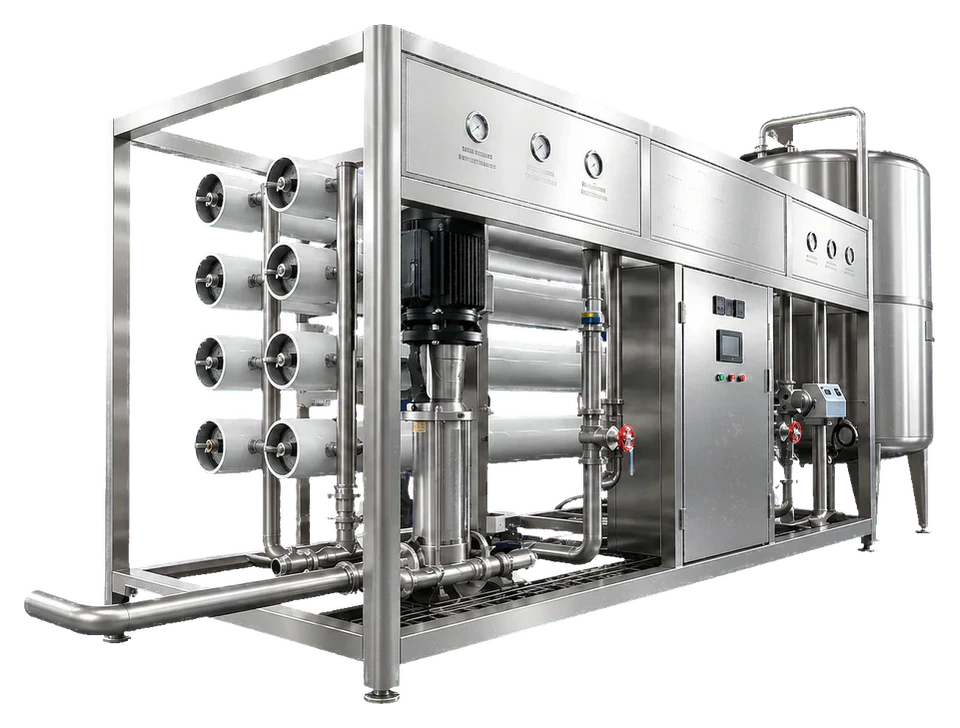
01Water treatment
Water treatment equipment · configuration depends on the source water
Stage 01PET bottle CSD
Water treatment
Prepare the water used for syrup preparation and beverage blending. Treatment is selected from the source-water analysis and finished-drink specification, so the recipe starts with a consistent water supply.
Purpose
Process water for the beverage recipe
Confirm
Source-water report · required water quality
Handoff
Treated-water supply to syrup and blending
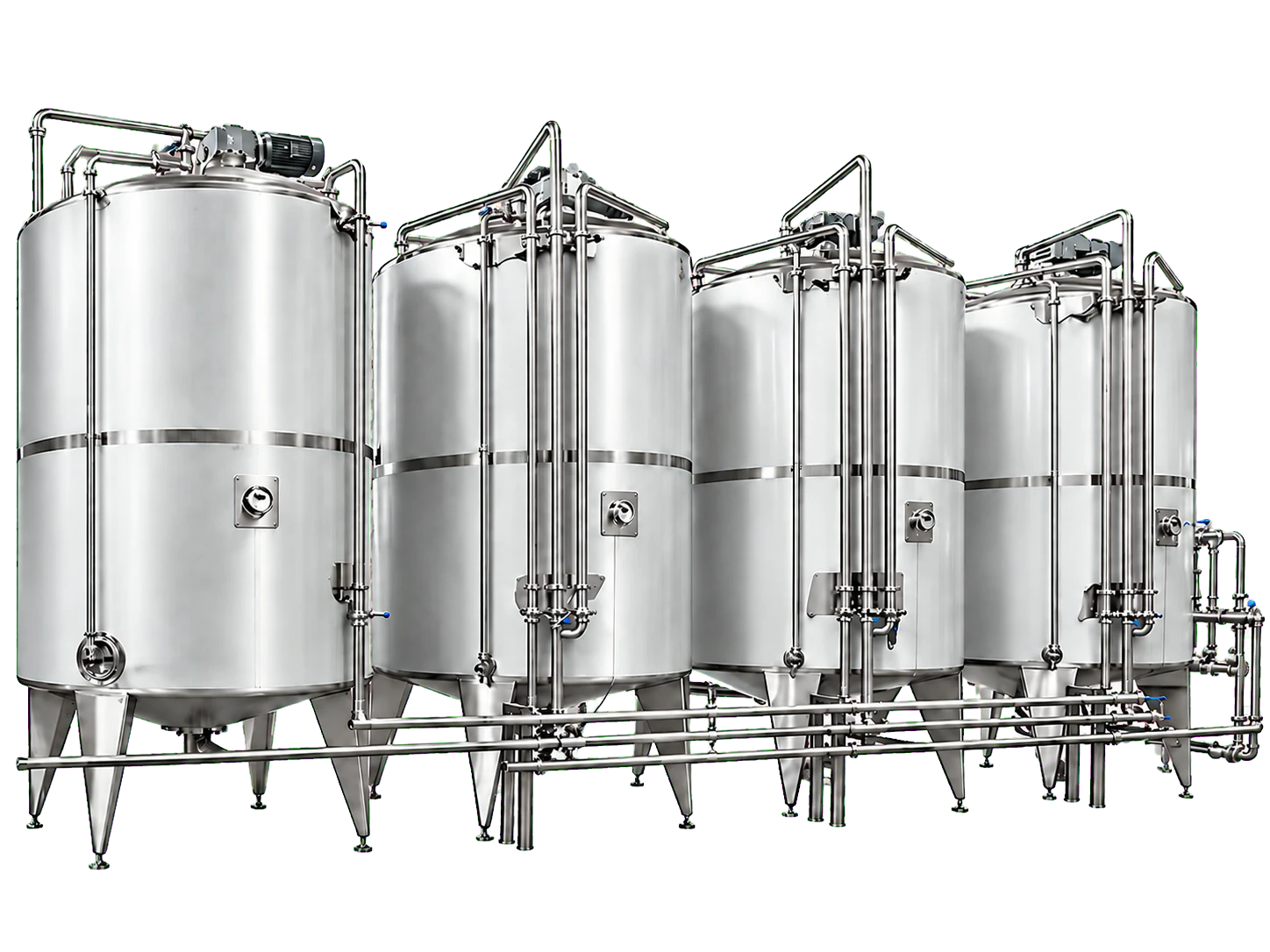
02Syrup & blending
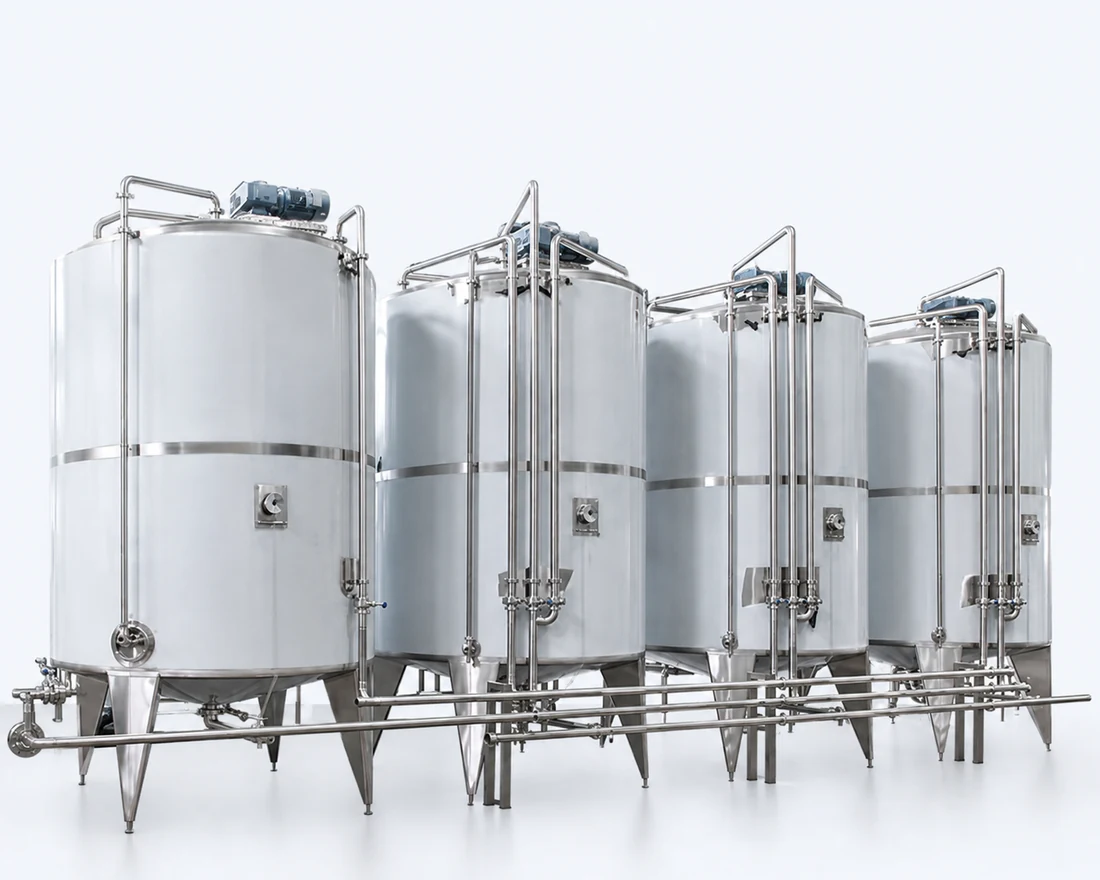
Beverage blending tanks · syrup preparation equipment is selected separately
Stage 02PET bottle CSD
Syrup & blending
Prepare the syrup and blend it with treated water and the specified ingredients. The recipe determines the mixing sequence and proportions; the blending stage provides a consistent beverage for cooling and carbonation.
Purpose
Prepare and blend the beverage recipe
Confirm
Ingredients · mixing ratio · target Brix
Handoff
Blended beverage to the cooling and carbonation stage
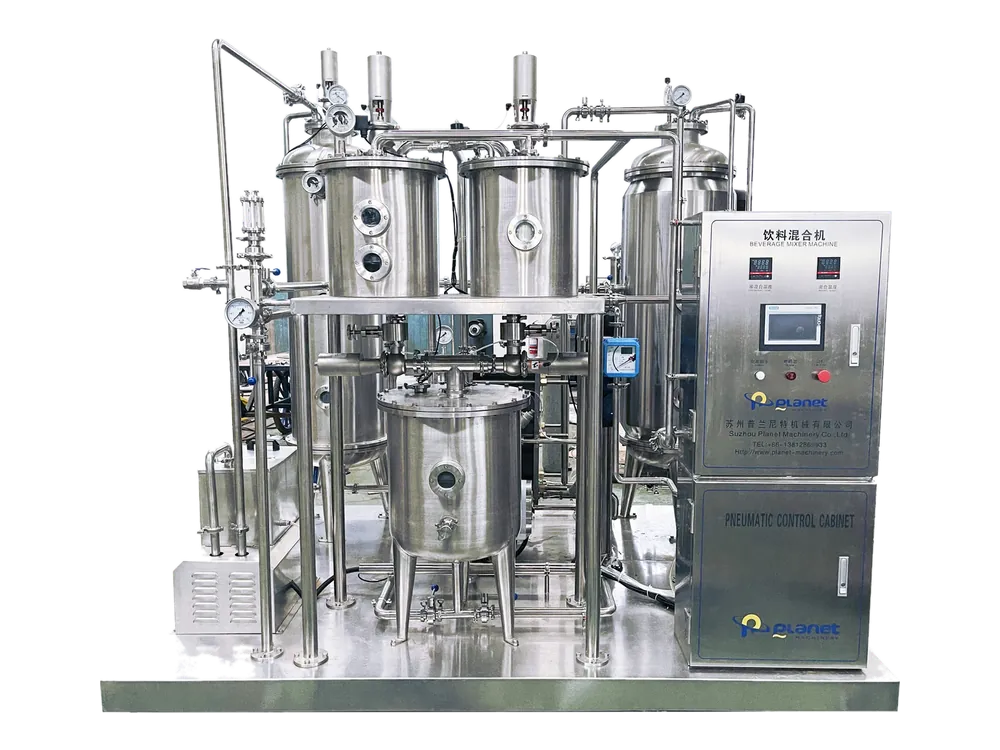
03Cooling & carbonation
Stage 03PET bottle CSD
Cooling & carbonation
Cool the blended beverage and introduce CO₂ to the confirmed carbonation target. Product temperature, gas dosing and transfer pressure are coordinated with the filler to support consistent carbonation and limit foaming.
Purpose
Prepare chilled carbonated beverage for filling
Confirm
Recipe · product temperature · CO₂ target
Handoff
Pressure-controlled beverage transfer to the filler
Carbonation skid illustration · cooling utilities are project-specific
04Bottle supply
Optional PET blowing equipment · not required when suitable empty bottles are supplied
Stage 04PET bottle CSD
Bottle supply
Supply pressure-rated PET bottles from an in-house blower or a ready-made bottle infeed. Bottle preparation runs alongside beverage preparation, with both routes meeting at the filling machine.
Controlled empty-bottle feed to rinsing and filling
05Rinse, fill & cap
Stage 05PET bottle CSD
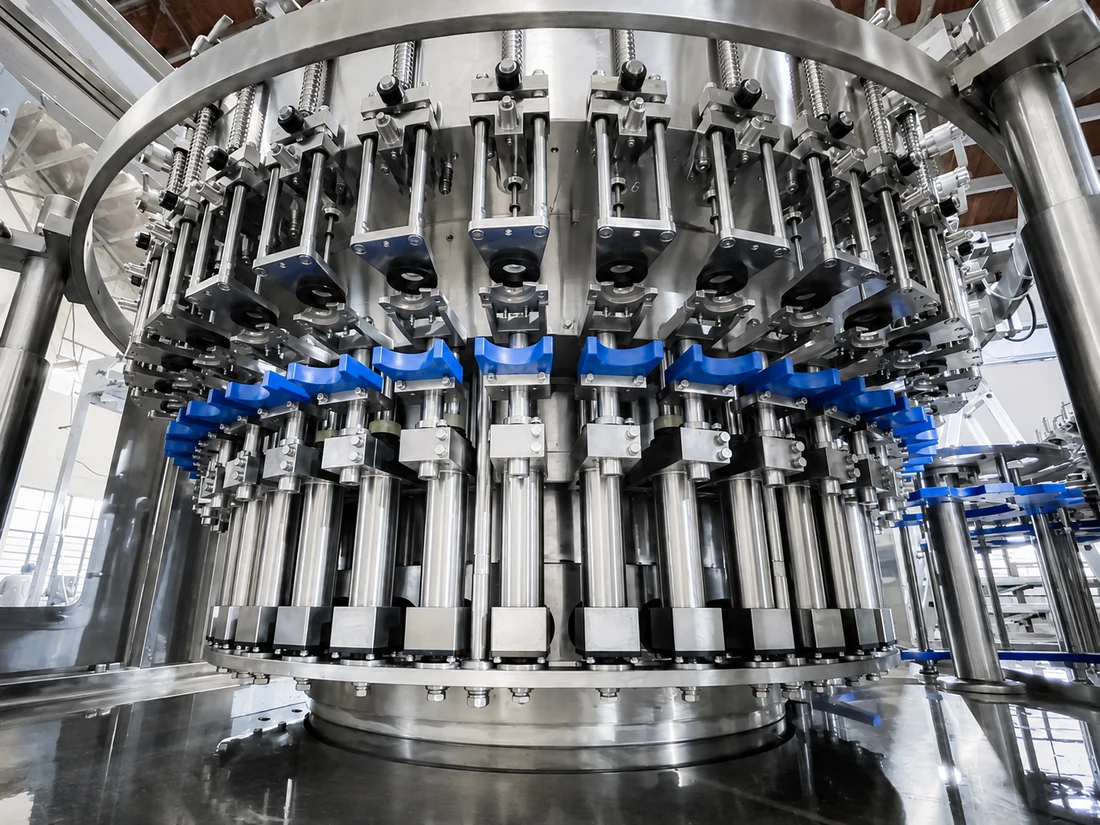
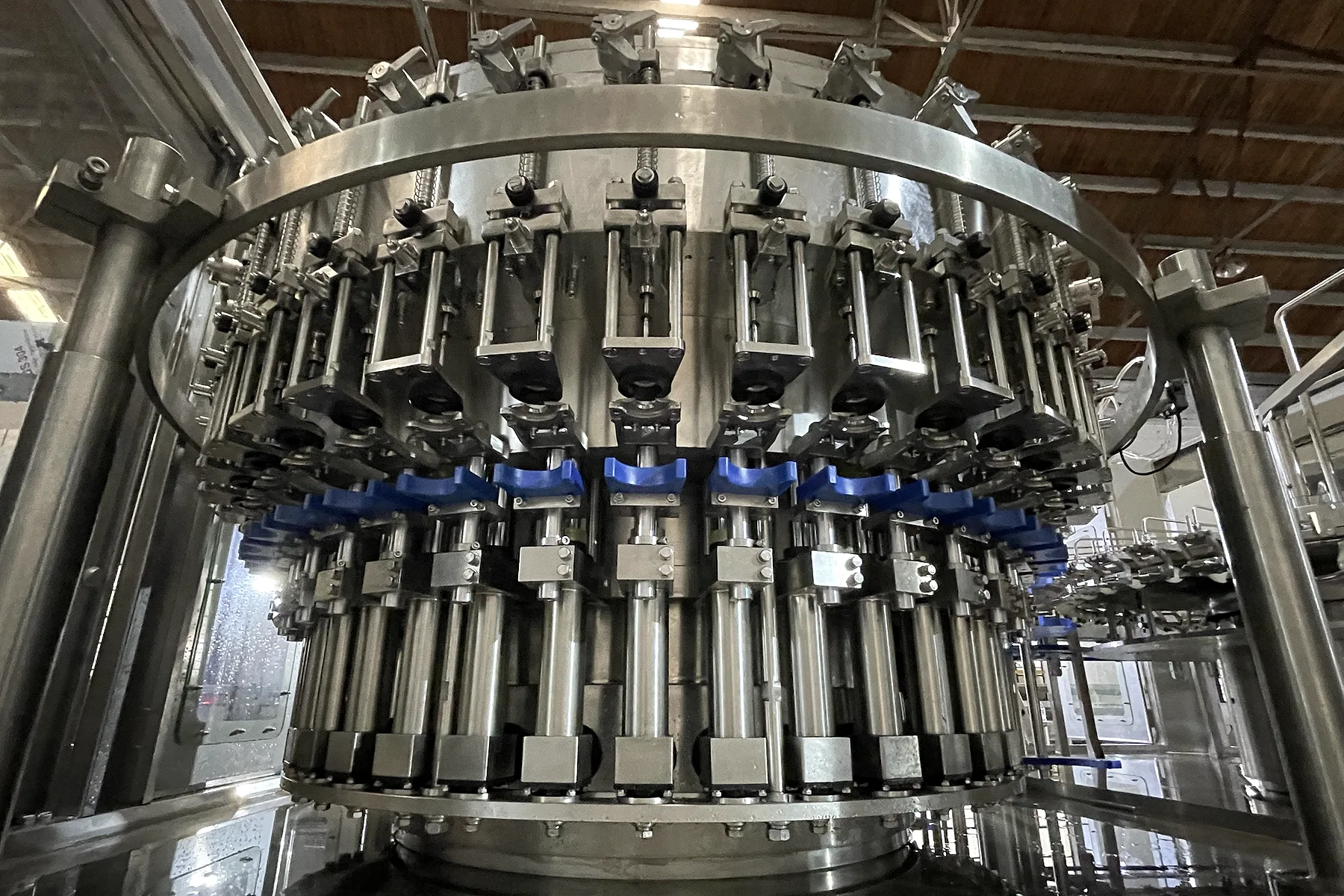
Rinse, fill & cap
Prepare the bottles for filling, introduce the carbonated beverage under controlled counter-pressure, then apply the matched screw cap. Filling conditions and bottle transfer are coordinated to limit CO₂ loss and foaming before closure.
Fill volume · beverage temperature · bottle and cap samples
Handoff
Closed bottles to downstream inspection and labeling
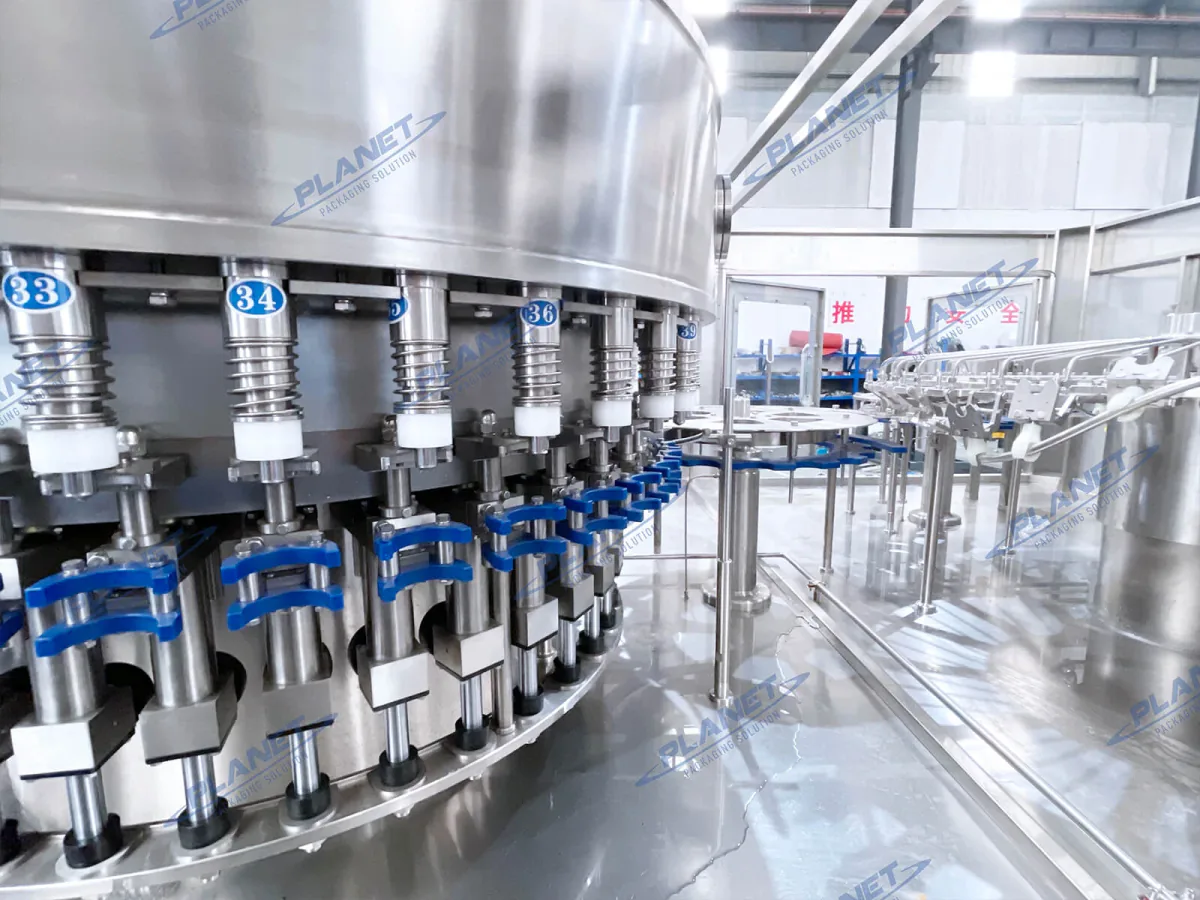
Filling-valve detail · illustrates the filling stage, not the complete monoblock
06Inspect & label
Stage 06PET bottle CSD
Inspect & label
Check the filled bottles against the agreed inspection criteria, prepare the bottle surface for labeling and apply product identification. Label style, batch coding and any reject system are selected around the PET bottle and packaging specification.
Purpose
Check and identify the finished bottle
Confirm
Label material · artwork · code location · inspection scope
Handoff
Identified bottles to the secondary-pack infeed
Labeling equipment · inspection and coding modules are configured separately
07Secondary packaging
Shrink-wrapping illustration · carton packing requires the corresponding equipment
Stage 07PET bottle CSD
Secondary packaging
Group finished PET bottles into the required saleable or transport pack. Shrink film, tray-and-film or carton packing is selected from the bottle size, pack count and distribution requirements rather than assumed from filler output alone.
Options
Shrink film · tray and film · cartons
Confirm
Bottle dimensions · bottles per pack · packaging material
Handoff
Completed packs to palletizing
08Palletizing
Automatic palletizing equipment in operation · pallet wrapping and handling scope to be confirmed
Stage 08PET bottle CSD
Palletizing
Arrange finished packs into the agreed pallet pattern for warehouse handling and dispatch. Pallet dimensions, layer arrangement and load height define the stacking task; load securing and stretch wrapping are included where specified.
Early technical questions are collected here so the main production route stays easy to follow.
What information is needed to select the filler?
Provide the PET bottle drawing, bottle volume, target bottles per hour, beverage recipe, target CO₂ level, filling temperature, closure and pack format. These inputs determine the pressure-filling configuration and downstream balance.
Why must the bottle be reviewed for CSD?
A carbonated beverage places the PET bottle under internal pressure. The bottle drawing, preform, resin distribution, base design and closure must therefore be reviewed as one pressure package.
How are carbonation conditions selected?
The recipe owner should confirm the required CO₂ volume and sensory target. Product temperature, operating pressure and carbonation equipment are then selected together; they should not be copied from a still-water line.
Can the line start with preforms or empty bottles?
Yes. An integrated blower gives more control over bottle supply and logistics, while ready-made bottles reduce upstream machinery. In both cases the supplied bottle must be approved for the confirmed CSD pressure.
Are 6,000 and 12,000 BPH catalog ratings?
No. They are traceable references found in the supplied project footage and CAD filename. Final sustained output, footprint, power, staffing and utilities are confirmed only after the complete project scope is reviewed.
Line inquiry
Plan your PET CSD line.
Send the bottle drawing, beverage recipe, CO₂ target, output, closure and pack format. These inputs let the engineering team prepare a suitable pressure-controlled route.
Bottle Beverage Temperature Output
Request a line proposalProject details sent to engineering
Inquiry received.
Our engineering team will follow up on the missing CSD-line inputs.

 Delivered project
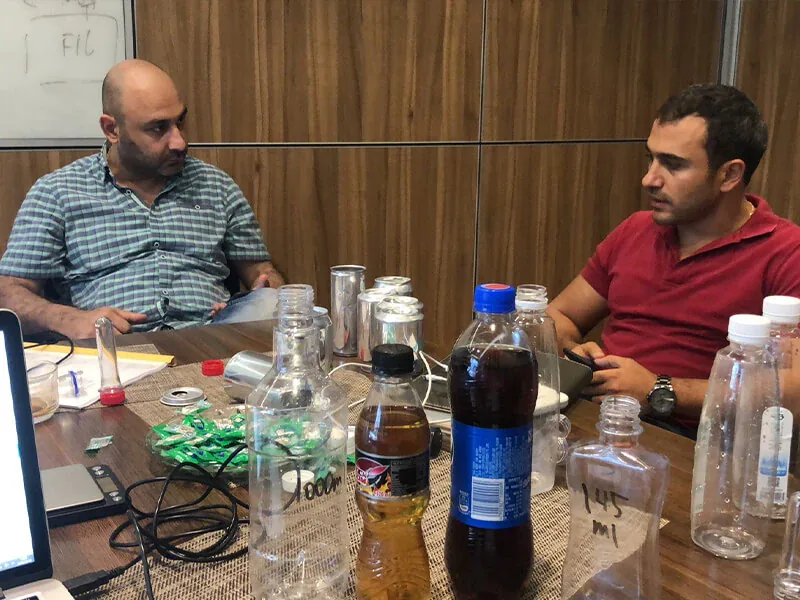
 Project discussionCustomer team · Indonesia